
The Mill’s Main Street Miracle
Article written by Marvin
In a project full of surprises, the first one to greet architect Nick Henninger when he approached the historic Alabama factory complex he was tasked with renovating might have been the strangest.
“There were some trees,” he recalls, “growing out of the roof.”
Beyond the site’s decidedly non-traditional landscaping, the individual buildings that would be the focus of his work were largely obscured by corrugated metal roofing held up by a spiderweb of steel girders.
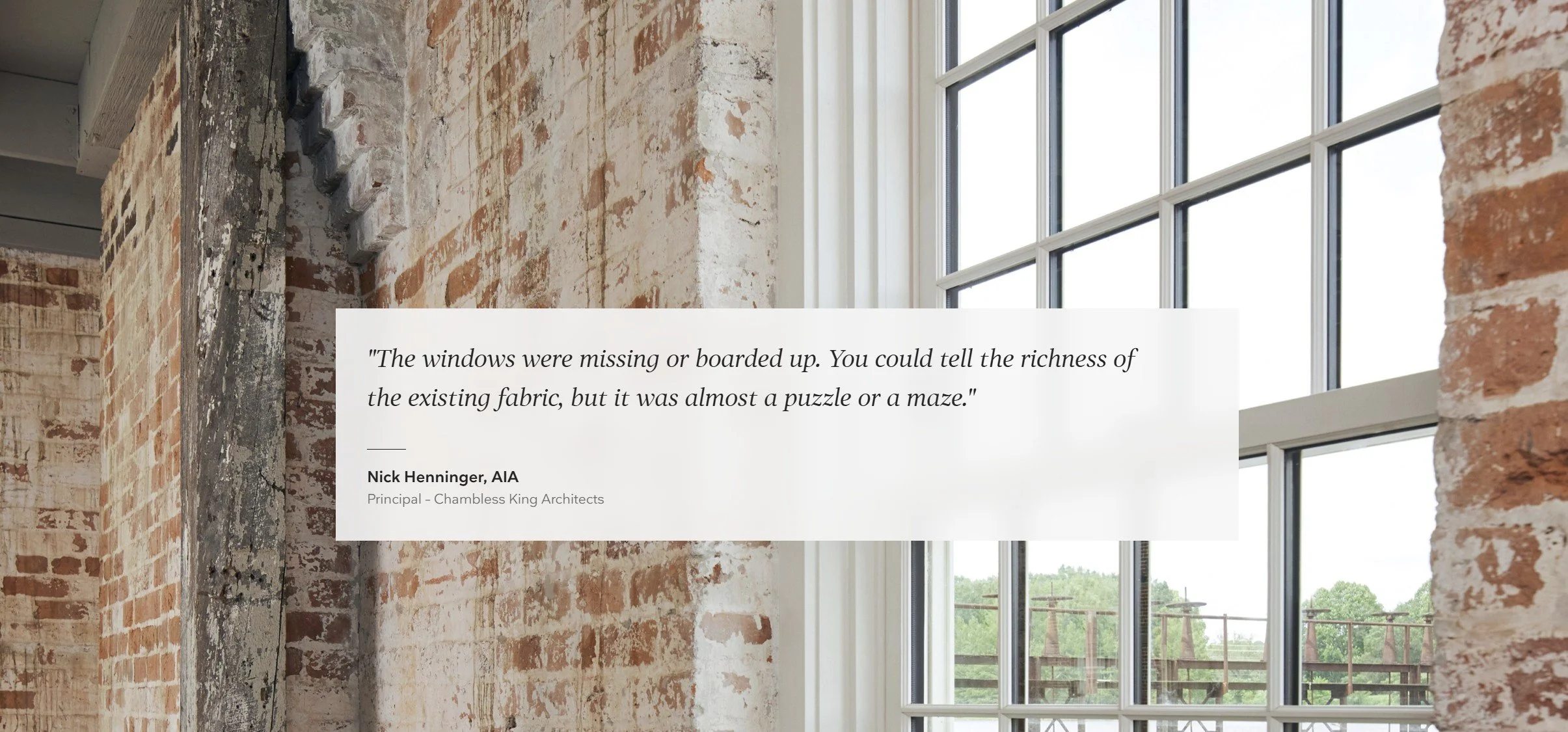
“You’d come across a brick building, but the roof was cutting it off so you didn't really know what it looked like,” Henninger says. “The windows were missing or boarded up. You could tell the richness of the existing fabric, but it was almost a puzzle or a maze.” Just getting enough of the roofing, framework and derelict machinery out of the way to get a clear sense of what condition the buildings were in would be a massive undertaking.
Uncovering a Rich History
Alabama’s first major industrialist, Daniel Pratt, made his fortune manufacturing cotton gins in the town that bears his name: Prattville. Originally constructed in 1848 just off the town’s budding Main Street, the Pratt Gin Company was built next to Autauga Creek, which was critical for powering the early industry of the 1800s.
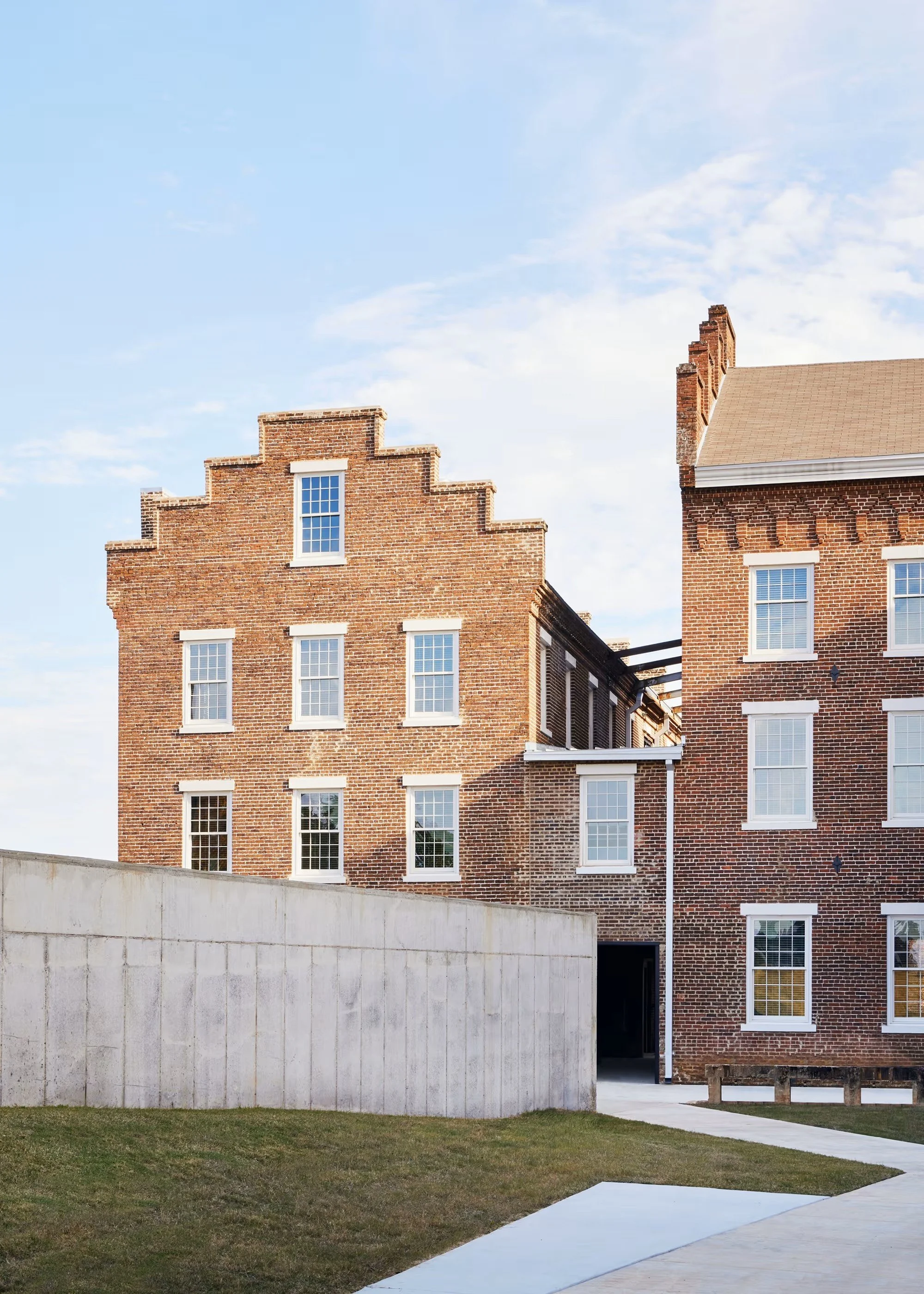
Over the next 150 years, the company became the world's largest manufacturer of cotton gins, and the mill itself grew into a sprawling complex of buildings and machinery. The individual buildings reflected a range of architectural styles spanning more than a century. According to Henninger,
“When they added on, they would do something that would reflect the building methods and materials of the day."
Pratt Gin Company remained in operation as the hub of the community until 2009. But after it closed, the complex soon fell into disrepair and was put up for sale in 2011. A local effort to save the historic site gave rise to The Mill, a 147-unit luxury apartment complex designed by Henninger’s firm, Chambless King Architects.